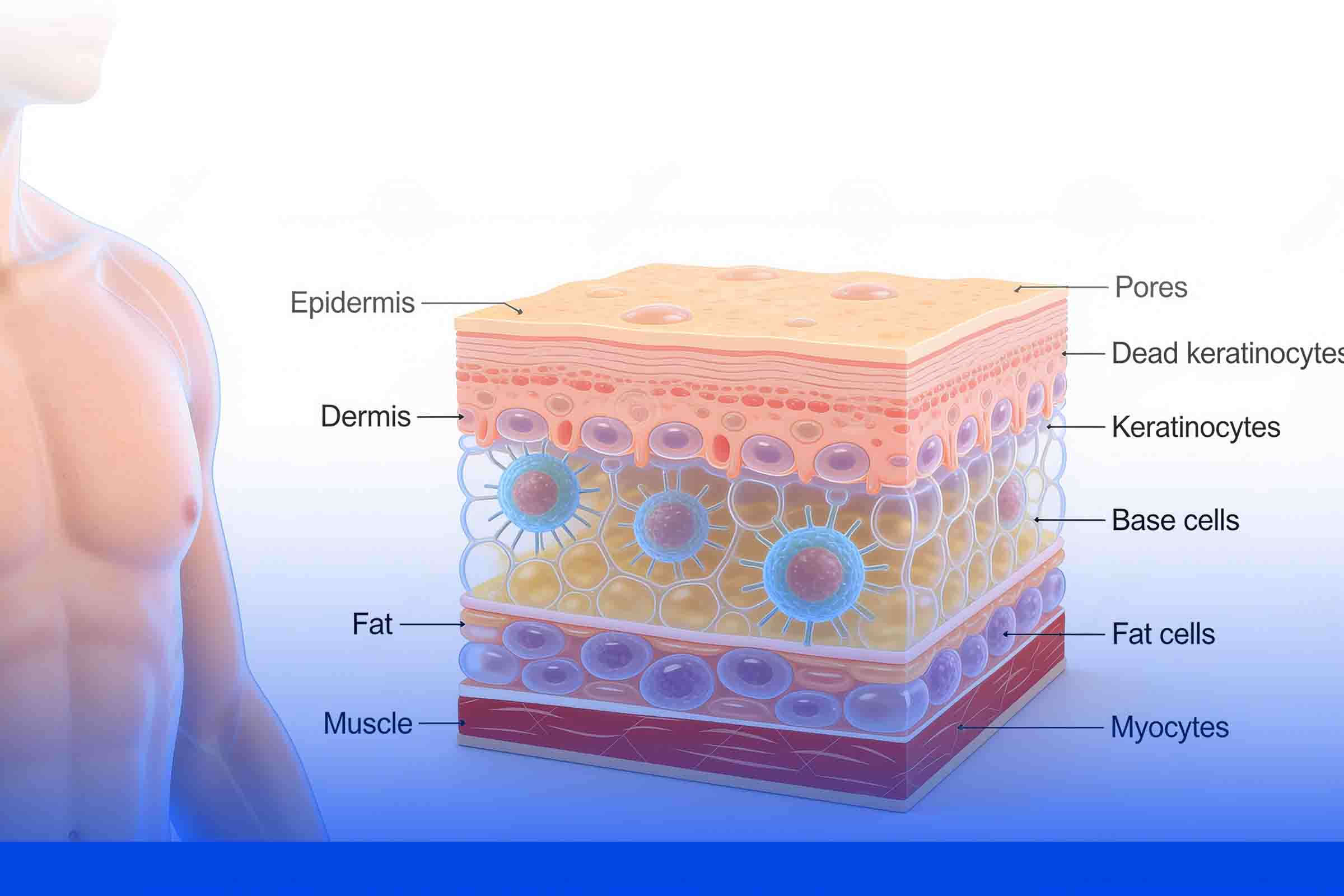
This system is a connector between the facial muscles and the dermis. It allows us to move our faces and controls facial expressions. Additionally, it acts as a support structure for the face and neck. This structure is partially responsible for the shape of our face as well.
As we age, the SMAS starts to descend downward due to a loss of elasticity in the SMAS membrane and in the epidermis. This leads to the formation of saggy skin and cheeks and “turkey neck” (wrinkled and sagging skin of the neck). Unfortunately, no topical treatment can directly target the SMAS and keep it firm as we age. Studies have shown that although creams, massages, and facial exercises can have an anti-aging effect on the skin, they do not affect the ligaments and muscles. So, facial exercises do not have any effect on the SMAS.
A more common procedure that combats the effects of the aging SMAS is a rhytidectomy, commonly known as a facelift. This procedure is conducted under anesthesia, and targets sagging in the face and neck, loose skin, hollow cheeks, and other signs of aging. However, the SMAS facelift is an invasive procedure requiring the patient to undergo anesthesia. It can take up to several hours, and adverse side effects such as nerve damage, pain, numbness, scarring, and changes in skin colour may occur.
More recently, new skin treatments such as Dynamic Muscle Activation are non-invasive and tighten and lift the skin. This technology relies on deep electrical stimulation of the facial muscles. This then stimulates the contraction of SMAS, resulting in tightening of the skin. Think about it like a workout for your facial muscles!